

Peyronie’s Disease Treatment in London
Our London clinic offers expert care for Peyronie’s Disease (PD), helping men regain confidence and comfort. With advanced treatments and a compassionate team, we focus on your health, well-being, and recovery.
What is Peyronie’s Disease (PD)?
Peyronie’s Disease (PD) is a condition in which scar tissue forms inside the penis, causing it to bend or curve. This can lead to pain, difficulty during sexual activity, and emotional stress, affecting both confidence and quality of life.
Chronic (stable) Stage:
Acute Stage: Pain and noticeable curvature appear. This stage usually lasts 6–12 months and may involve swelling or tenderness.
Stable Stage: Pain reduces, but the bend or scar tissue remains. During this stage, the condition stabilizes, and treatment can help improve function and appearance.
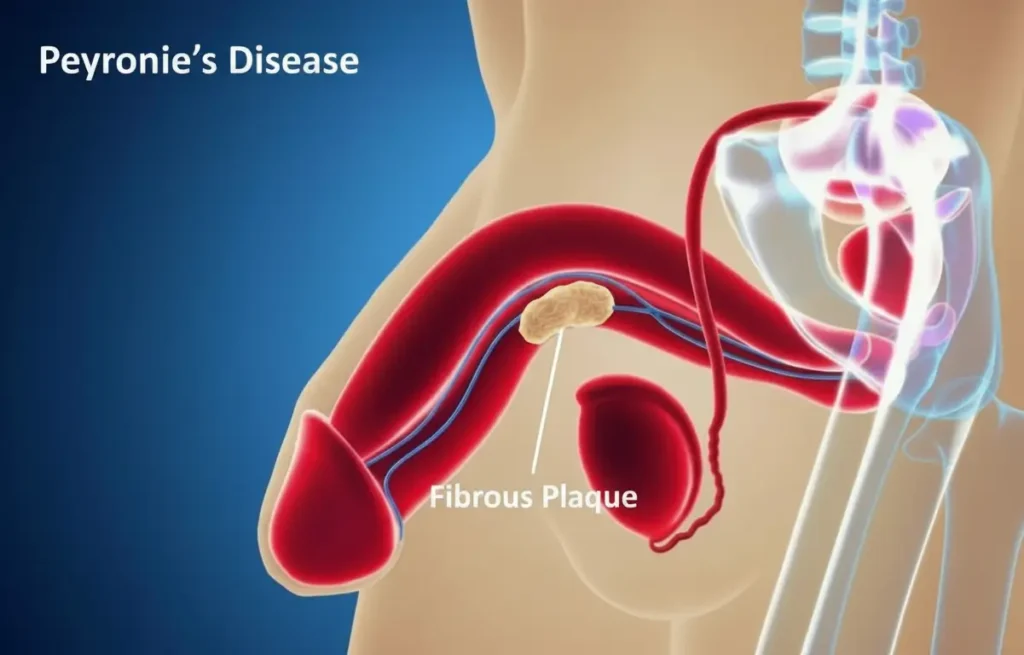
Symptoms
Men with PD may notice:
A noticeable bend or curve in the penis
Lumps or hardened areas under the skin
Pain during erections
Shortening or narrowing of the penis
Emotional stress, embarrassment, or reduced confidence
PD affects both physical and emotional health, so early treatment is important.
Causes of Peyronie’s Disease
Peyronie’s Disease (PD) happens when scar tissue forms inside the penis. This can cause bending, pain, and difficulty during erections. The exact cause is not always clear, but several factors can increase the risk:
Injury or Trauma
Small injuries to the penis, often during sex or sports, can lead to scar tissue. Even if the injury seems minor, repeated trauma may trigger PD over time.
Genetics
Some men have a family history of PD or other connective tissue problems. This inherited tendency can make scar tissue more likely to form.
Connective Tissue Disorders
Conditions like Dupuytren’s contracture (tightening of tissue in the hands) are linked to a higher chance of developing PD. These conditions affect how the body heals and forms scar tissue.
Age
PD is more common in men over 40. As men age, the elasticity of tissues decreases, making scar tissue formation more likely.
Medical Conditions
Health issues such as diabetes, high blood pressure, or heart disease can affect blood flow and tissue repair. This can make PD more likely or worsen existing symptoms.
Injury or Trauma
Small injuries to the penis, often during sex or sports, can lead to scar tissue. Even if the injury seems minor, repeated trauma may trigger PD over time.
Genetics
Some men have a family history of PD or other connective tissue problems. This inherited tendency can make scar tissue more likely to form.
Connective Tissue Disorders
Conditions like Dupuytren’s contracture (tightening of tissue in the hands) are linked to a higher chance of developing PD. These conditions affect how the body heals and forms scar tissue.
Age
PD is more common in men over 40. As men age, the elasticity of tissues decreases, making scar tissue formation more likely.
Medical Conditions
Health issues such as diabetes, high blood pressure, or heart disease can affect blood flow and tissue repair. This can make PD more likely or worsen existing symptoms.
Impact of Peyronie’s Disease
Peyronie’s disease can affect people in different ways. It’s important to understand and address all aspects of how the condition can affect you.
Changes in Shape
Tap to read more
Peyronie’s can cause different shape changes in the penis, with most reporting a bend (in any direction), but other reporting shortening of the penis or narrowing of the penis (into an hourglass shape).
Changes in Function
Tap to read more
Peyrnoie’s disease can lead to problems with reduced erectile hardness, which can affect sexual function.
Psychological impact
Tap to read more
- Peyronie’s can have a profound impact on confidence.
- Up to 50% of men with Peyronie’s can report symptoms of depression.
Non-Surgical Treatment Options
Many men improve without surgery. Our clinic offers effective, non-invasive treatments designed to reduce the impact of Peyronie’s, aiming to reduce curvature and pain, and improve sexual function and confidence.
1. Medical therapy
Oral medication aimed at improving erectile function and pain and managing the impact of Peyronie’s disease, and the potential use of Injections to help reduce curvature.
2. Traction therapy
Aimed at improving shape changes to the penis, and restoring some loss of penile length.
3. Pyschosexual therapy
Aimed at addressing the psychological impact of Peyronie’s on confidence and sexual function.
Surgical treatment of Peyronie’s Disease
A proportion of men with PD will need to surgery to improve their condition. This is best reserved for those who are unable to have sex due to the physical impact of their condition, rather than just to make the penis look cosmetically straight.
← scroll left over table to read more
| Procedure type | Who is it for | What it does | Advantages at a glance | Disadvantages at a glance |
|---|---|---|---|---|
|
Plication procedures (For example: Nesbitt’s, Yachia, TAP, Lue 16 dot) |
Suitable for curvatures up to 60 degrees with good erectile function. | Shortens the unaffected side to make the penis straight | Significantly lower risk of erectile dysfunction or changes in sensation | Will cause penile shortening |
|
Plaque Incision and Graft (For example: Lue and Egydio techniques) |
Suitable for curvatures greater than 60 degrees with good erectile function. Also used to correct, complex bends, hourglass changes, hinge effects, excessive penile shortening | Incises into the plaque on the shortened side, and uses a graft to rebuild and straightening the penis | Can restore lost length while correcting penile curvature | Greater risk of causing erectile dysfunction and changes in sensation of the penis |
| Penile Implant (Malleable or inflatable device +/- graft & modelling) | For patients with any degree of curvature and concurrent erectile dysfunction non-responsive to oral medication | Replaces the defective erectile function mechanism and straightens penis with one procedure. | Restores lost length, and corrects erectile dysfunction while getting the penis straight. High degree of patient and partner satisfaction in well selected and counselled patients | Penile implants are permanent, and patients need careful counselling on the pros and cons of these devices |
How Is Peyronie’s Disease Diagnosed?
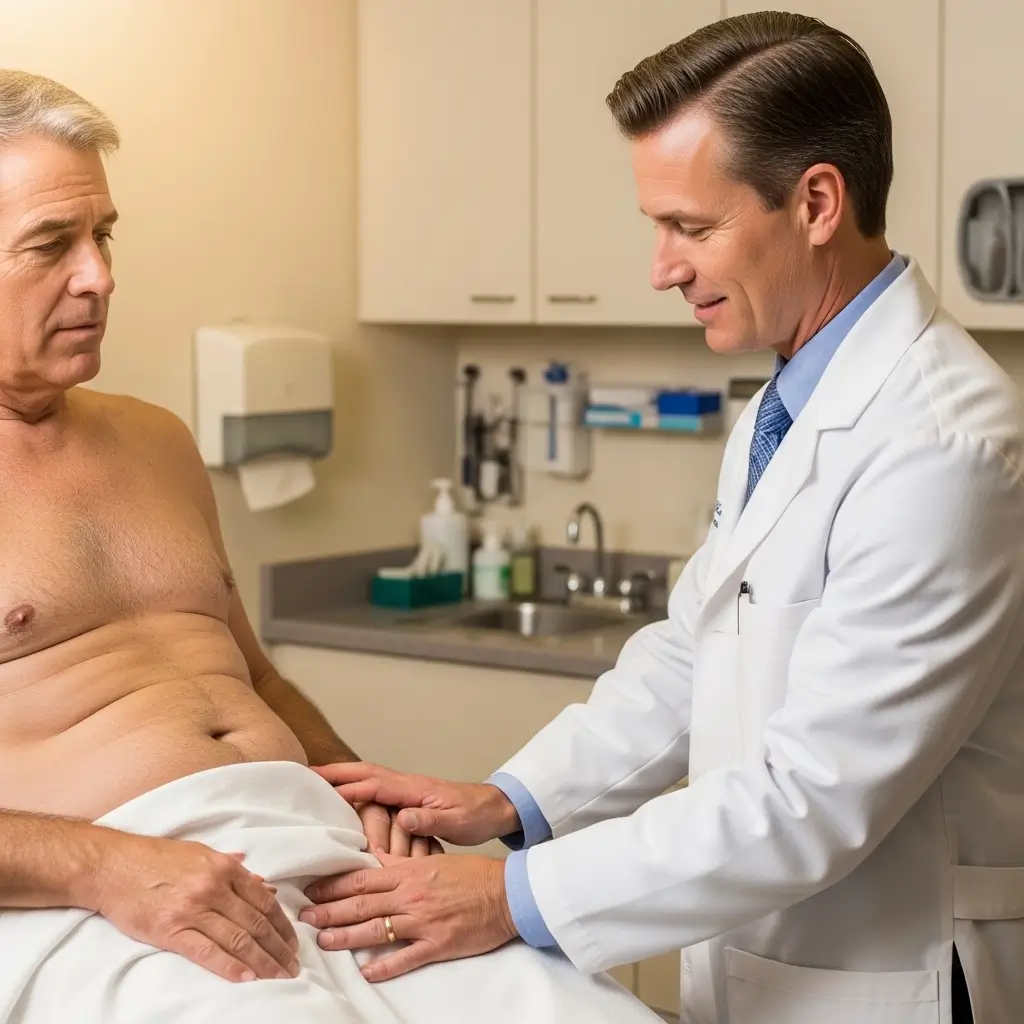
Diagnosis of Peyronie’s Disease begins with a detailed medical history and a physical examination. Your doctor will ask about your symptoms, pain, sexual function, and any previous injuries or medical conditions.
Common diagnostic steps include:
- Measurement of Curvature: The doctor measures the bend or deformity during an erection to monitor changes over time.
Symptom Questionnaires: Patients fill out forms about pain, sexual difficulties, and emotional impact to guide treatment planning.
Additional Tests (if needed): Blood tests or other exams may be done to rule out underlying conditions like diabetes or hormonal issues that could affect healing.
Early diagnosis is important because it allows for timely and effective treatment, which can reduce pain, improve curvature, and enhance sexual function.
Why Choose Our Clinic in London
Our London clinic offers expert care for Peyronie’s Disease with experienced specialists in men’s health. We provide the latest treatments, personalized care, and a confidential, comfortable environment. Every patient receives a tailored plan, ongoing support, and advanced therapies to reduce pain, improve curvature, and restore confidence.
Frequently Asked Questions
I can feel a lump in my penis – is Peyrnoie’s disease cancer?
No- a peyronies plaque is scar tissue that feels like a lump under the skin. It’s not cancerous, and does not turn into a cancer.
Have I done something to cause Peyronie’s and is it something I can pass on?
No- Peyronie’s is not something you catch or can pass on. It is scar tissue in the penis that may occur after injury during sexual activity, although many men don’t recall ever having an injury.
Is there anything I should do before I go to the clinic?
Yes – taking photographs can be helpful at guiding the discussion. Watch this guide on how to take photos https://www.youtube.com/watch?v=CVRjAuormxU
Can you cure Peyronie’s disease?
No there is no cure for Peyronie’s. While treatments can effectively manage the impact of the condition, no treatment can take you back to exactly how things were before you developed the condition (be wary of clinics that say they can!).
I’ve heard about Stem Cell Therapy and Shockwave Treatment for Peyronie’s. Do they work?
At present there is no good or clear evidence that these types of therapy have any benefit in Peyronie’s disease, and they should only be used as part of a clinical trial, rather than as standard treatments.